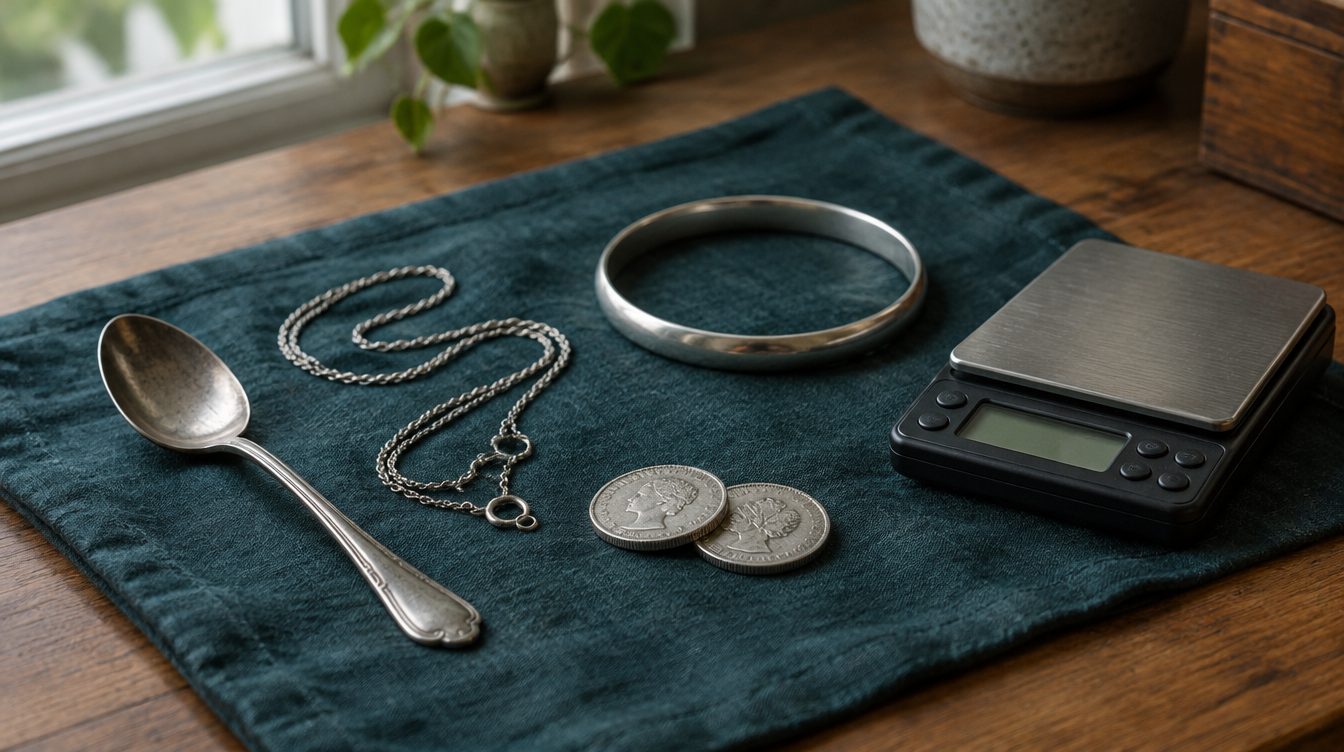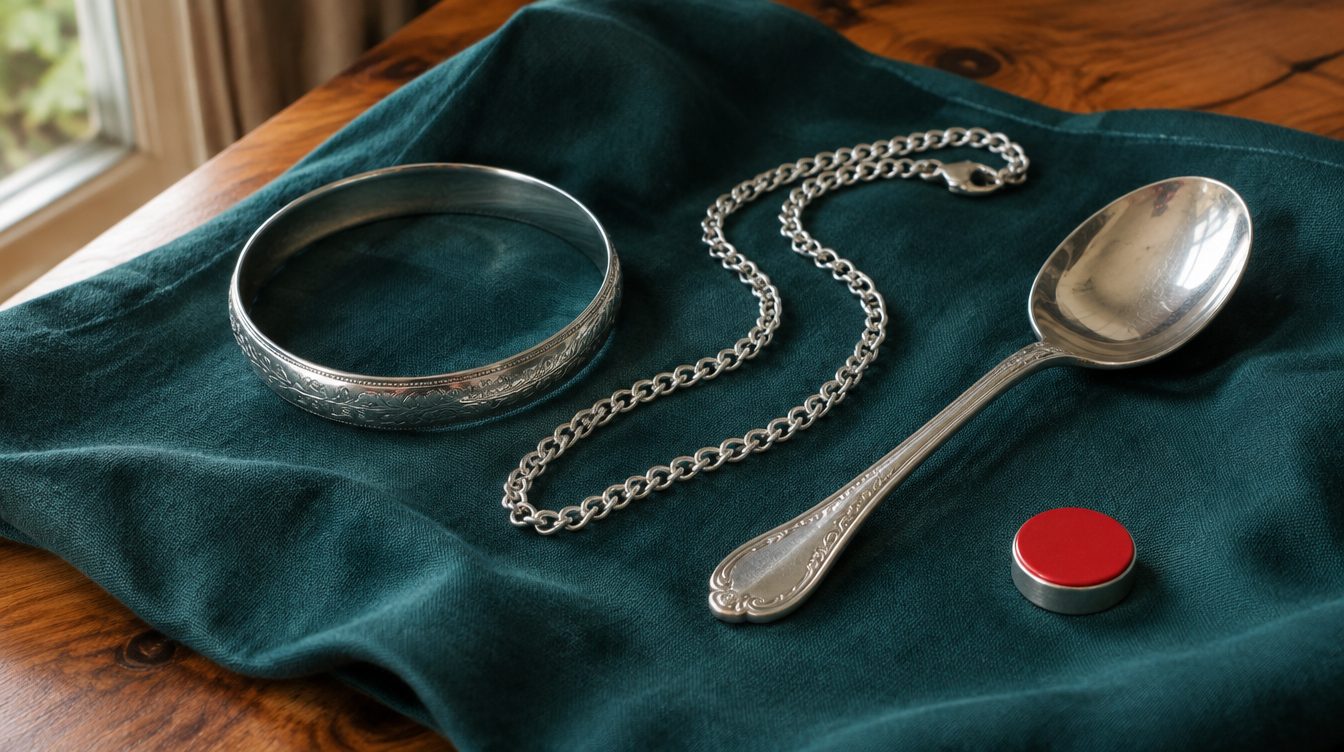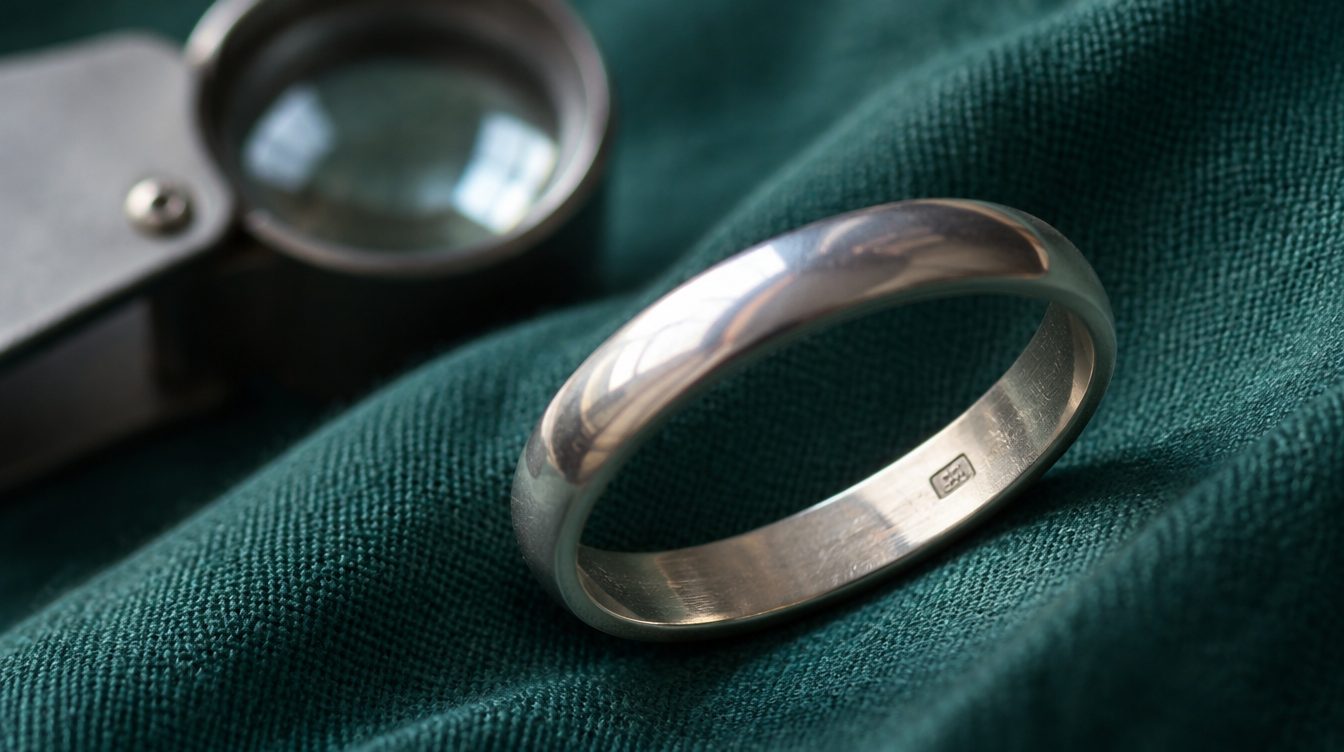
Sterling silver is 92.5% silver and 7.5% other metals. It's usually stamped 925, Sterling or STG, and pieces made in the UK often carry a lion mark as well. Sterling does tarnish, but it cleans up.
What the 925 stamp means
Silver purity is marked in parts per thousand. The Assay Office explains that 925 means 925 parts silver per thousand, or 92.5% silver, which is the sterling standard.
| Mark | Silver content |
|---|---|
| 999 | Fine silver, 99.9% |
| 958 | Britannia silver, 95.8% |
| 925 | Sterling silver, 92.5% |
| 800 | 80% silver |
Tarnish on sterling silver
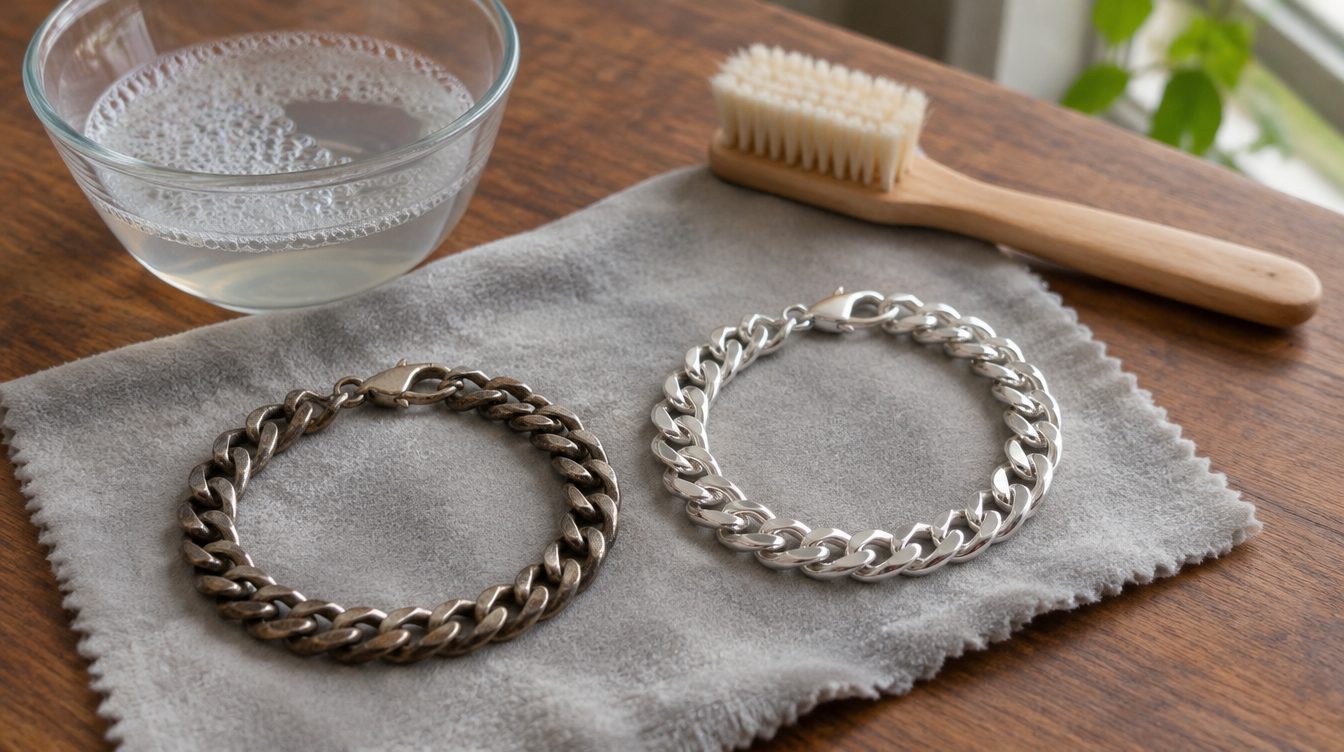
Sterling tarnishes, because silver darkens when it's exposed to sulfur-containing gases. The tarnish cleans off, and how to clean silver jewellery shows how.
Sterling silver and silver plate
Silver plate is a thin layer of silver over another metal, often marked EPNS or EP, and it holds very little silver.
A piece stamped 925 is usually sterling, although a stamp alone doesn't prove it, and how to tell if silver is real covers the other signs.
How sterling silver is valued
Sterling is valued on its silver, which is its weight times 92.5%. Silver price per gram shows today's figures, and selling silver in Melbourne covers selling it.
Questions
Is sterling silver real silver?
Yes. Sterling is 92.5% silver.
Does 925 mean it's sterling?
Yes. 925 means 925 parts silver per thousand, the sterling standard.
What's the difference between 925 and 999 silver?
925 is 92.5% silver and 999 is 99.9% silver.
Is EPNS sterling silver?
No. EPNS is silver plate over another metal.