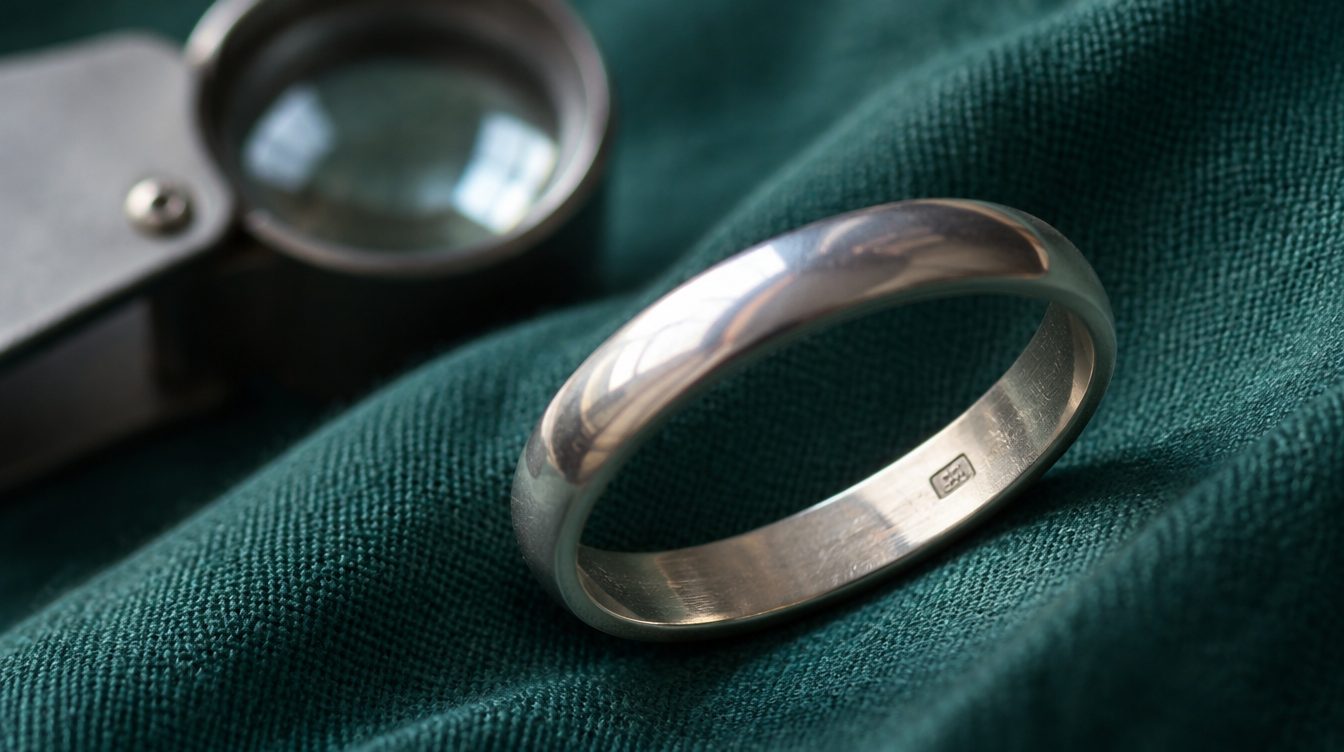
Start with the stamp. Marks such as 925, Sterling, STG, 800 or 999 point to solid silver, and EPNS or EP mean silver plate. Silver isn't magnetic, so a piece that grabs a strong magnet probably isn't solid silver, and wear on the edges can show plating rubbing through. A stamp is a good sign, and a buyer can test the metal to confirm it.
Looking for a stamp
| Mark | Means |
|---|---|
| 925, Sterling, STG | Sterling silver, 92.5% |
| 800 | 80% silver |
| 999 | Fine silver, 99.9% |
| EPNS, EP, EPBM | Silver plate |
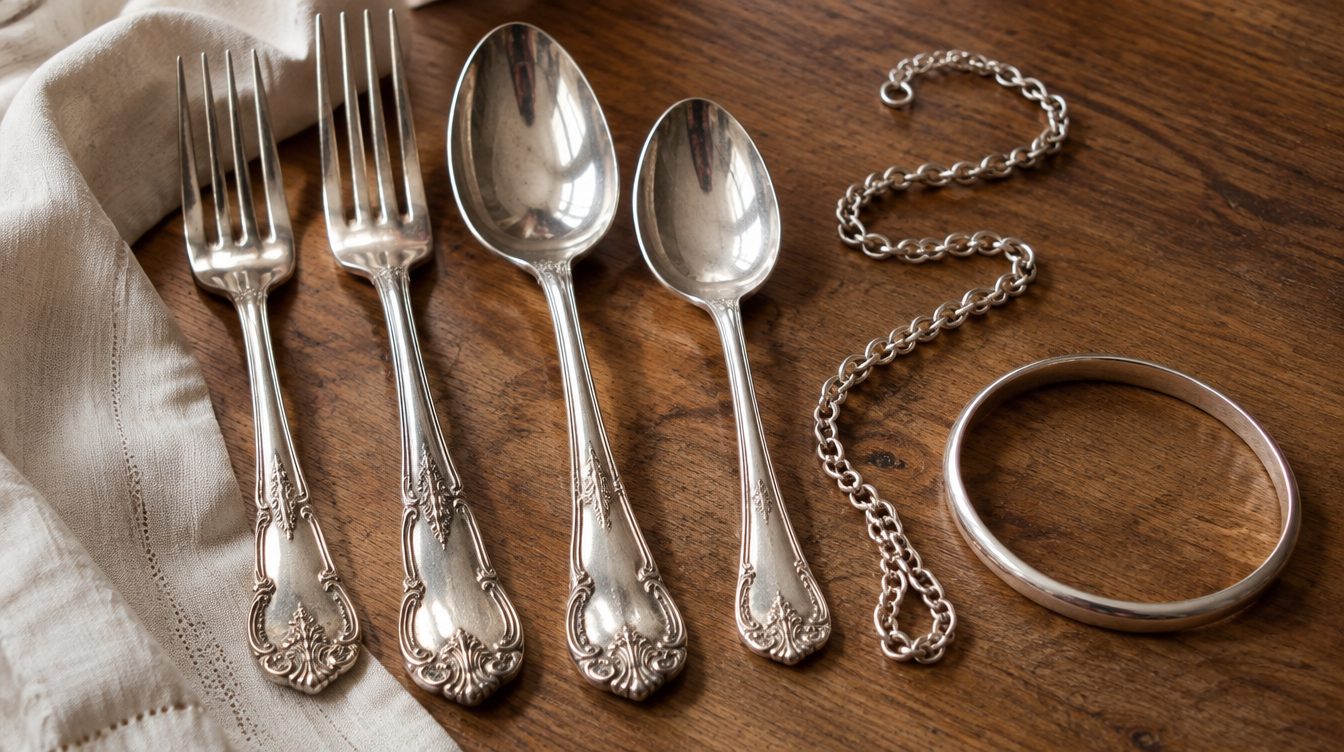
Stamps are usually inside a ring band, on a clasp, or on the back of a spoon or fork handle. Old British silver may have a lion mark in place of a number.
Trying a magnet
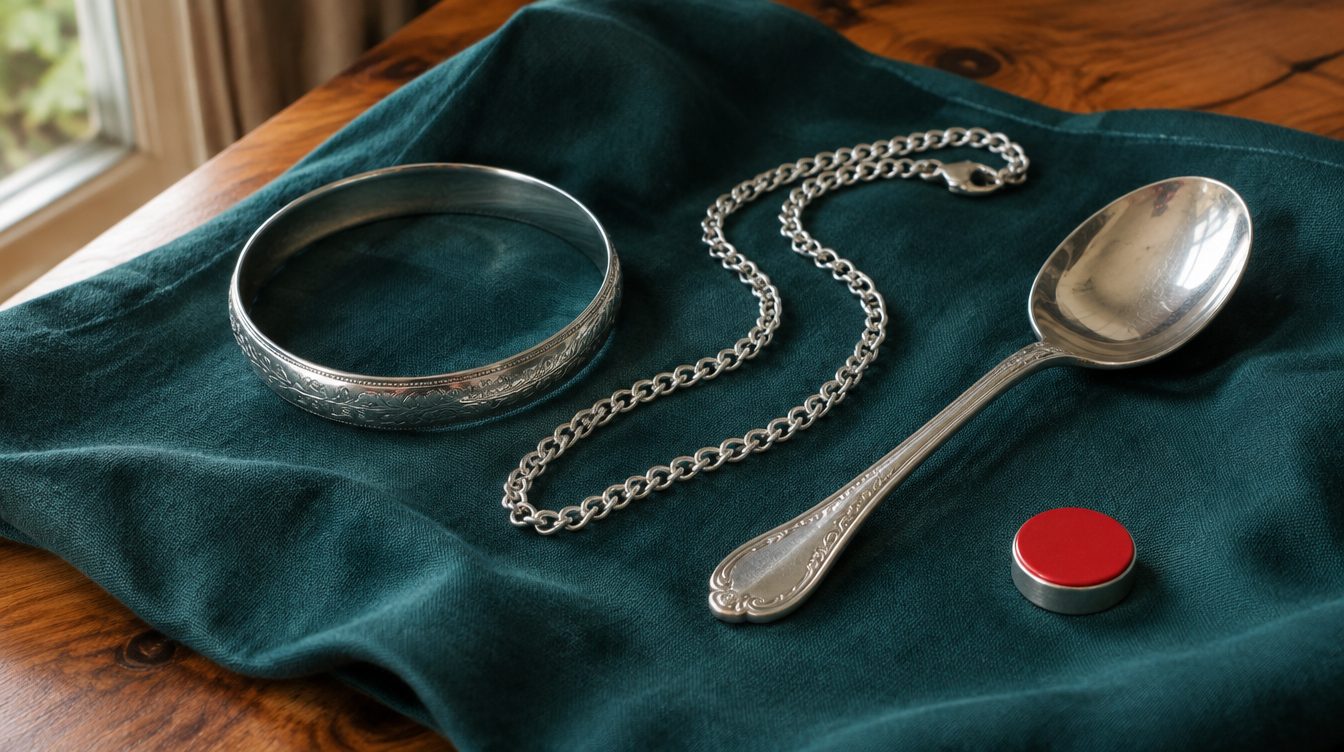
Silver isn't magnetic, so if a strong magnet grabs the piece it's probably not solid silver. A piece that doesn't react is a good sign, although other metals aren't magnetic either.
Clasps and springs are often steel, so test the main part of the piece.
Looking for wear
On plated pieces the silver layer wears through on the edges and high points, showing a coppery or yellowish metal underneath.
Tests to leave to a buyer
Acid, scratching and bleach tests can damage a piece and still give a wrong answer, so leave them to a buyer or jeweller.
How a buyer tests silver
A buyer looks at the marks and then tests the metal to confirm it. To sell, see selling silver in Melbourne, and for gold, see how to tell if gold is real.
Questions
Is silver magnetic?
No. A piece that sticks to a strong magnet is probably not solid silver.
Does 925 mean real silver?
It means sterling silver, 92.5% silver. A buyer can still test it to confirm.
What does EPNS mean?
Electroplated nickel silver, a thin layer of silver over another metal.
My silver has no stamp. Is it real?
It might be, since older and handmade pieces aren't always stamped. It can be tested.